Tuesday, March 20, 2007

Delosperma – all dressed up for winter

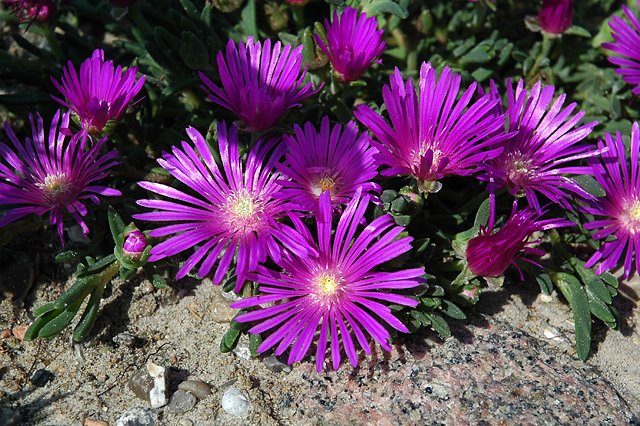
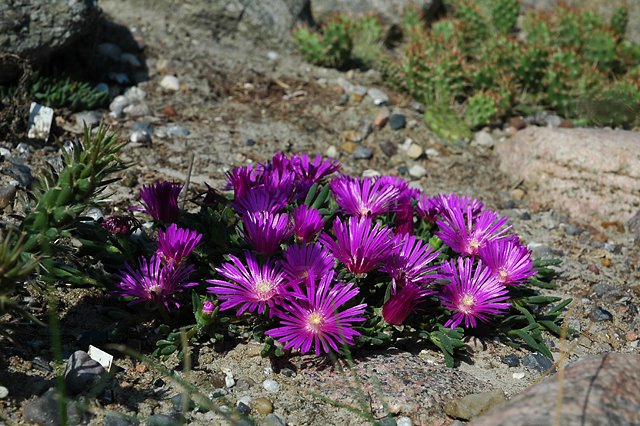
This winter has been wet, wet, wet in Denmark, but not all that cold. It’s probably not the optimal environment for Delosperma, but the four species I’m currently cultivating certainly don’t seem to mind their growing conditions. Most of the plants have assumed a reddish hue as illustrated by the photos below. All plants are growing in unprotected beds.

Delosperma nubigenum (Sani Pass, 2900m, Lesotho)

Delosperma sp. 'John Proffit' (East Cape Drakensberg)

Delosperma sp. (Sani Pass, Lesotho)

Only the Delosperma sp. (Drakensberg) is its usual bright green self, showing only slight traces of red pigmentation.

Delosperma sp. (Drakensberg)

Saturday, March 03, 2007

Flowering Escobaria sneedii

Last summer my Escobaria sneedii (SB 173; Doña Ana County, New Mexico) plants flowered for the first time.

Flowering Escobaria sneedii

The E. sneedii plants are heavily branching, eventually forming large clusters. The stems are obscured by a dense cover of bright snowy white spines, and the flowers are a pale rose-pink with slightly darker midstripes.

The plants are grown in a coldhouse and are exposed to temperatures well below freezing during winter. They are allegedly very rot-prone, so I grow them in an inorganic, mineral soil with extremely good drainage. The plants are kept bone-dry during winter but watered rather freely during their growing season.

Flowering Escobaria sneedii – top view

I bought the plants from Mesa Garden during a visit to the US a couple of years ago.

Escobaria sneedii is also known as Coryphantha sneedii.

Saturday, September 30, 2006

Delosperma – late flowering

I know this post is a bit out of context, but the Delosperma plants are growing among my winter hardy cacti so that ought to give it some relevance ;-)

Having passed the autumnal equinox I hadn’t expected any flowers from the Delosperma plants – nevertheless two of them are still displaying a few.

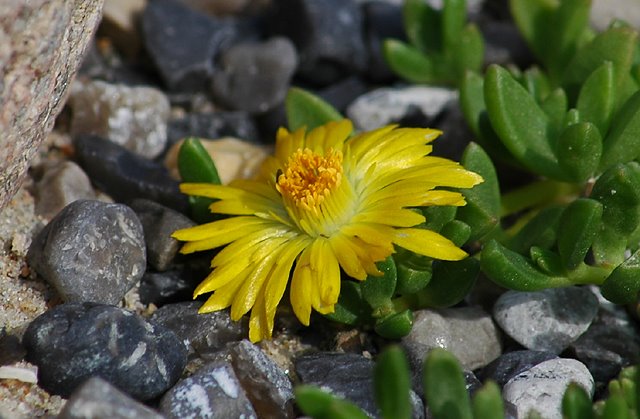
Delosperma nubigenum

Delosperma nubigenum (hardy yellow ice plant) has a vigorous carpeting growth habit with succulent and evergreen foliage. The foliage is supposed to have a bright red winter color (this is my first season growing Delosperma so I can’t say for sure). The plant has been flowering all through summer, except for the hottest periods.

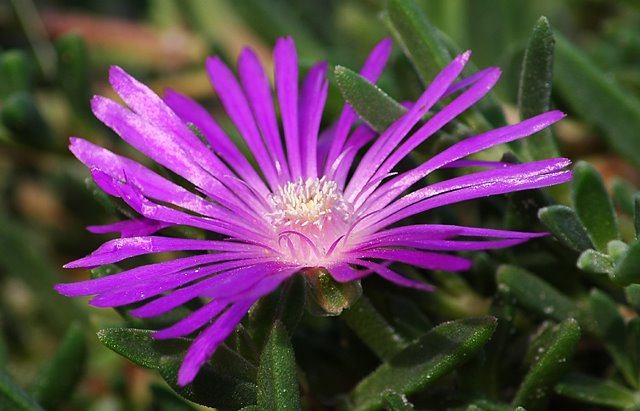
Delosperma 'John Proffit'

The prolific Delosperma 'John Proffit' almost exploded with growth during summer and grew a lot of flowers. I’m intrigued by the bright center of the flowers almost illuminating them from within when basking in the sun.

As mentioned I haven’t grown Delosperma before, so I’m a bit excited to see how (and if) they make it through winter.

Autumn colors

Well past the autumnal equinox the cacti are displaying a range of beautiful colors as they get ready for winter.

Cylindropuntia whipplei

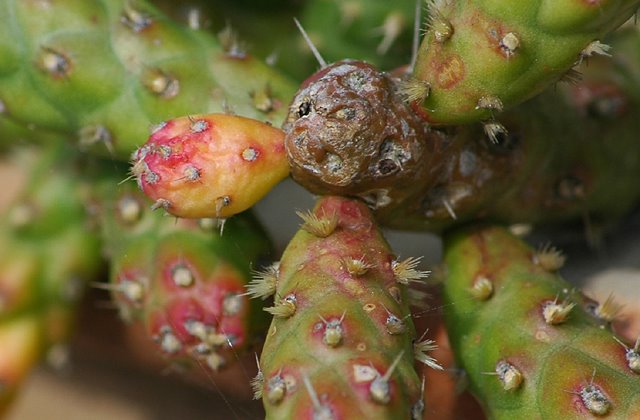
Cylindropuntia whipplei is turning reddish as it prepares for winter. Some of the not fully developed stem segments are going yellow-orange and will probably be shed before winter. The pictured plant is growing in a pot outside all year, only protected by a house wall. I had a C. whipplei growing unprotected in a bed, but it didn’t make it through last winter.

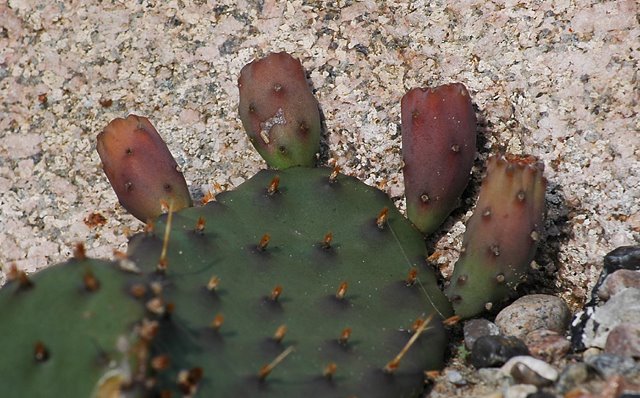
Opuntia humifusa was very popular with the bumble bees when it flowered and their activity has now resulted in many fruits.

Opuntia humifusa fruits

The glaucous coating gives the fruits an almost velvety sheen. I don’t know if O. humifusa is self-compatible or if the fruits are the result of hybridizing with other plants – I’ll sow the seeds and know in a couple of years ;-)

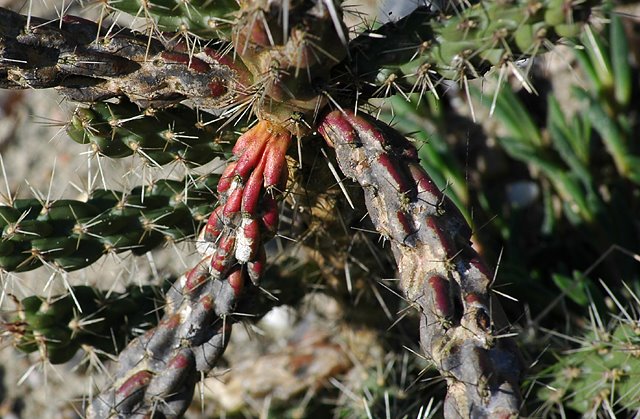
One of my Cylindropuntia viridiflora plants is growing completely unprotected in a bed. It had a hard time last winter and is now shedding some of the damaged branches that are turning deep Tyrian purple in the process.

Cylindropuntia viridiflora

The plant grew prolifically during summer so I hope it’s not completely set back by the upcoming winter.

Sunday, September 03, 2006

Flowering Opuntias – Summer 2006

A handful of my winter hardy Opuntias flowered this summer. In separate posts you’ll find details on O. humifusa, O. ‘Claude Arno’, and O. fragilis.

I’m growing my plants at a summerhouse which unfortunately means that I’m often missing a flower or two. This year I didn’t experience a single of the many flowers on my Opuntia polyacantha.

Opuntia polyacantha with spent flowers

Last year I posted a photo of the flowering Opuntia polyacantha.

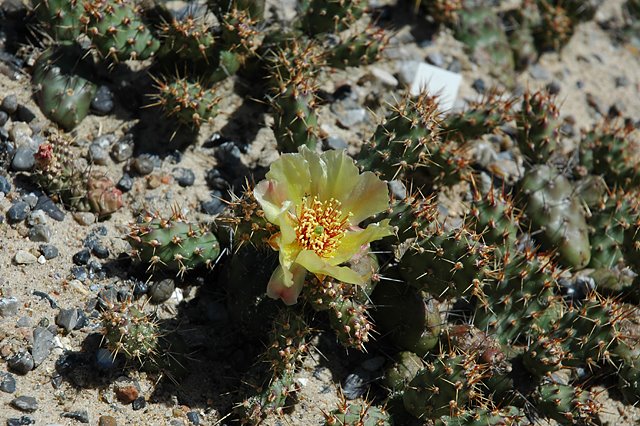
Flowering Opuntia humifusa

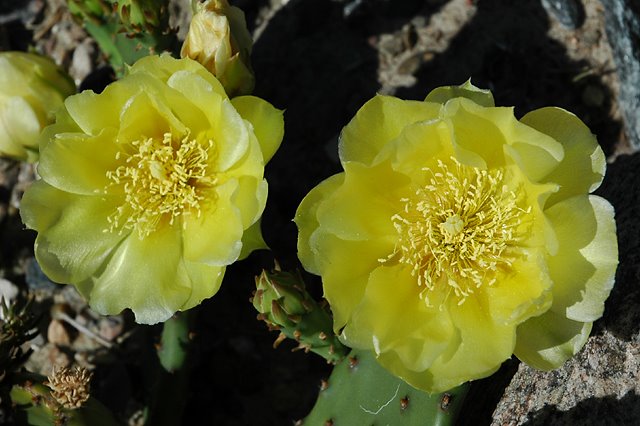
This summer my Opuntia humifusa set out on a flowering spree with loads of yellow flowers.

Flowering Opuntia humifusa

Initially the pure pale-yellow flowers didn’t appeal much to me, but I have to admit the “monochrome” flowers grow on you after a while.

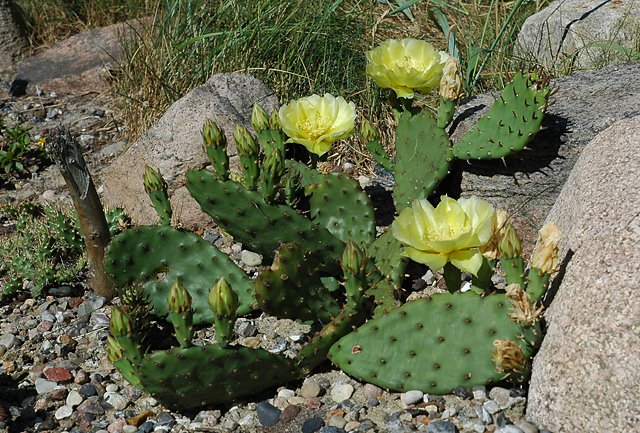
Opuntia humifusa plant

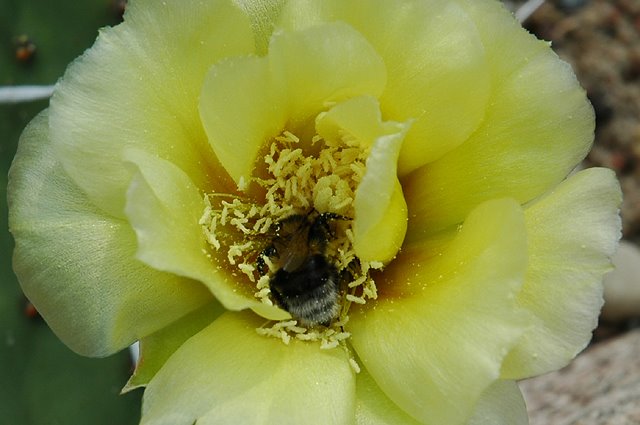
The bumble bees also seem to enjoy the flowers, virtually diving into them in their search for nectar and pollen.

Bumble bee enjoying an O. humifusa flower

Go to the overview of Opuntias flowering in 2006.

Flowering Opuntia ‘Claude Arno’

Opuntia ‘Claude Arno’ did it again – like last year it displayed a wealth of pink flowers this summer.

Flowering Opuntia Claude Arno
Flowering Opuntia ‘Claude Arno’

The rosy red flowers with the pearly sheen are one of my girlfriend’s favorites. She’s usually not into cacti but has a hard time resisting the pink charm of Claude Arno ;-)

Opuntia Claude Arno plant
Opuntia ‘Claude Arno’ plant

Go to the overview of Opuntias flowering in 2006.

Flowering Opuntia fragilis

With its dark green pads and reddish-brown spines the Opuntia fragilis (Butte Co, Nebraska) plant is beautiful in itself, but the yellow flowers, tinted red basally, with its red filaments, yellow anthers, and green stigma lobes are absolutely stunning.

Opuntia fragilis flower

The plant only set a handful of flowers this summer, which was a bit disappointing compared to last years bombastic display. I suspect it’s related to the plant being transplanted in the spring.

Group of Opuntia fragilis plants

Go to the overview of Opuntias flowering in 2006.

Sunday, August 13, 2006

Delosperma 'John Proffit'

Early this summer I planted a Delosperma 'John Proffit' among my winter hardy cacti. It’s a prolific grower and has been flowering most of the summer.

Delosperma 'John Proffit'

Allegedly Delosperma 'John Proffit' is cold hardy in Denmark – I’m hoping it survives the coming winter.

Delosperma 'John Proffit' growing among cacti

Monday, May 15, 2006

Opuntia and Cylindropuntia – new growth

After a couple of weeks of almost summer-like temperatures in Denmark the Opuntia species growing in my unprotected bed has resumed growth.

The ever trustworthy Opuntia 'Claude Arno' cultivar is bursting with budding cladodes.

Opuntia 'Claude Arno'

Opuntia 'Smithwick' is also a survivor, coming out of winter dormancy with great vigor.

Opuntia 'Smithwick'
Opuntia 'Smithwick'

My Opuntia polyacantha also lived through winter without damage.

Opuntia polyacantha
Opuntia polyacantha

Finally the Cylindropuntia imbricata plants growing in pots protected from the worst precipitation are much better off than the C. imbricata in the unprotected bed.

Cylindropuntia imbricata

Monday, May 08, 2006

Cylindropuntia - post winter status

My cacti are slowly recuperating as the growing season comes to a start. My regular Opuntias are all doing well; unfortunately my Cylindropuntias are marked badly by the cold and wet Danish winter.

The Cylindropuntia viridiflora looked beautiful in the snow but the top has now completely died back.

Cylindropuntia viridiflora – scorched by snow

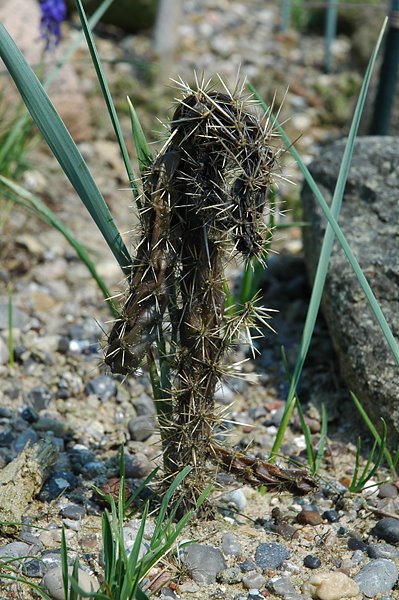
My Cylindropuntia whipplei flowered last summer with amazing yellow-green flowers. Today it resembles a bunch of withered twigs – the only part still (seemingly) alive is the absolute base of the plant. If it’s still alive it will probably be years before it flowers again.

Withered Cylindropuntia whipplei

Alas, my Cylindropuntia imbricata is dead. I’ll leave it standing as a “snag” in the bed (given the plant was old enough to have formed wood).

Dead Cylindropuntia imbricata

All of the plants above are (or were) growing in an unprotected bed. I have similar plants growing outside in pots with some protection from rain and snow – these plants are doing considerably better. This indicates that the harm is not inflicted by the cold (even though the winter was exceptionally cold this year) but rather the consequence of too much precipitation.

Monday, March 20, 2006

Opuntia 'Claude Arno'

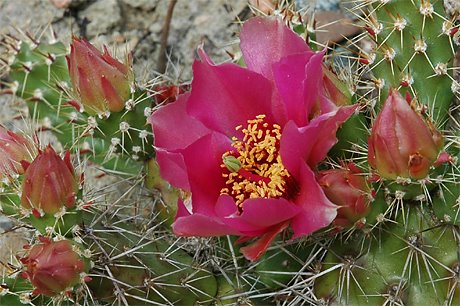
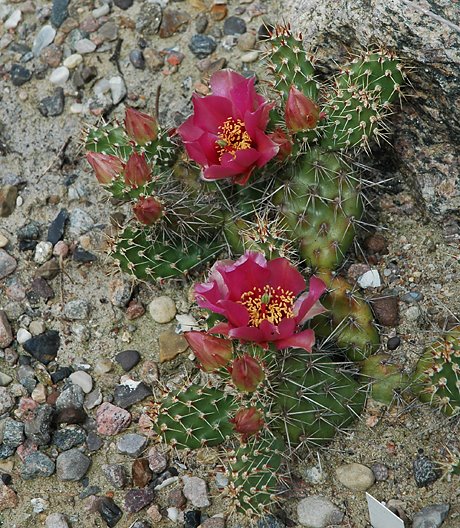
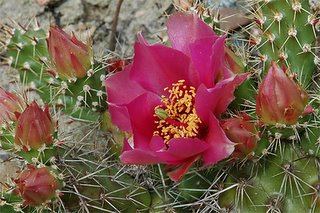
The second installment in the I-wish-it-would-be-summer-soon photo series features a flowering Opuntia 'Claude Arno'. The flowers are a distinct rosy red with a pearly sheen.

Opuntia 'Claude Arno' flower close-up

I bought the plant as a cutting from Bennys Kaktus a couple of years ago and it flowered for the first time last summer. According to Benny this cultivar is a hybrid of Opuntia fragilis and Opuntia polyacantha var. rhodantha.
Flowering Opuntia 'Claude Arno'

The pictures can also be seen as a fitting celebration of today’s vernal equinox ;-)

Monday, March 06, 2006

Cylindropuntia whipplei

While waiting for the return of summer I’ll post a handful of photos of plants that flowered last year. I'll start with my Cylindropuntia whipplei (MUG 125; 2100m, San Juan, New Mexico) that flowered for the first time even though it’s still young and far from being the compact shrub described in the Flora of North America.

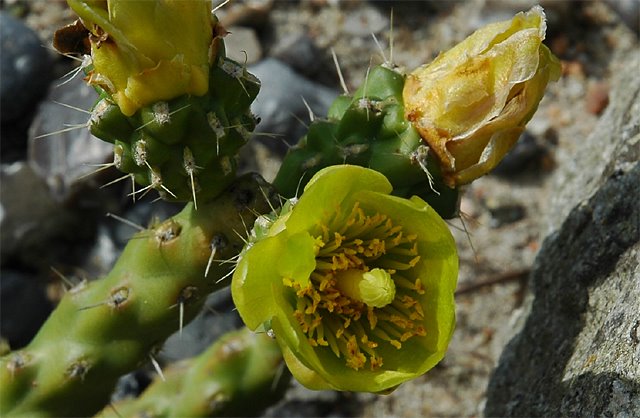
Cylindropuntia whipplei flower

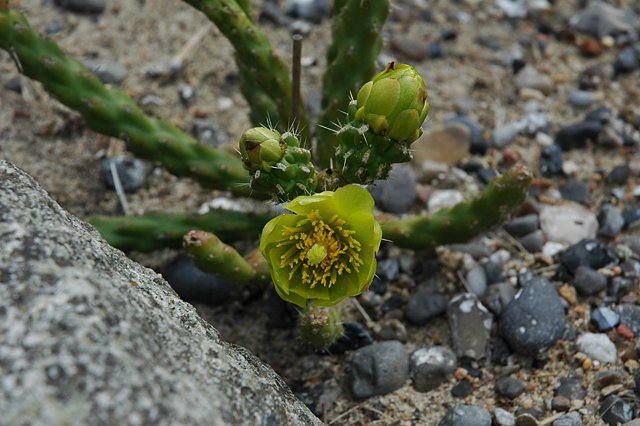
The flowers are a beautiful green-yellow and develops on the upper part of the stem segments.

Flowering Cylindropuntia whipplei

I’m a bit worried if the plant will make it through winter – last time I checked some of the stem segments seemed to be rotting. I hope the damage is located to individual segments and will not spread to the whole plant.

Saturday, February 18, 2006

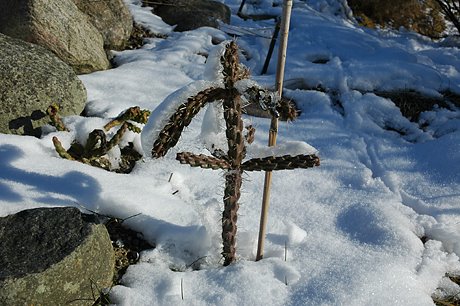
Cylindropuntia viridiflora in the snow

My Cylindropuntia viridiflora seems to be coping quite well with the cold and damp Danish winter. The plant pictured below is seemingly weighed down by snow, but the drooping form is common for plants in winter dormancy (as illustrated in the previous post).

Cylindropuntia viridiflora covered by snow

My plants are growing unprotected in a natural “raised bed” on top of a dune close to the north-western coast line of Denmark. Evidently the heap of sand is supplying sufficient drainage for the plants to survive the wet winters.

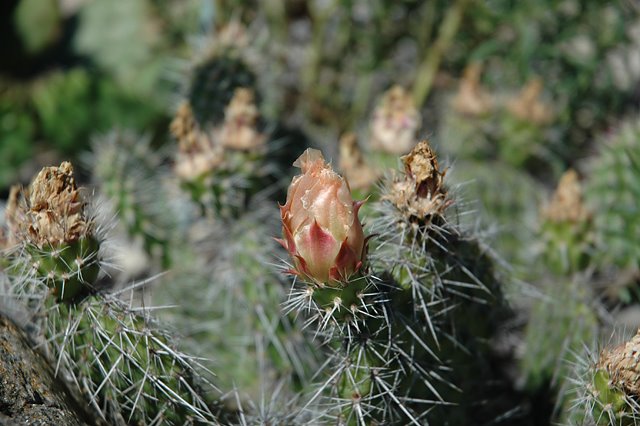
Cylindropuntia viridiflora

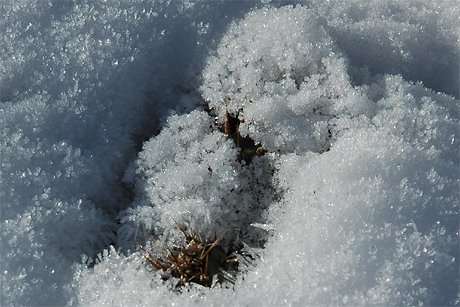
Opuntia sp. hidden in snow

Tuesday, December 27, 2005

Christmas Cacti

I can’t exactly say my cacti are basking in the sun – rather they are striving to endure the wet and cold Danish winter. The pictures below were taken December 25, 2005.

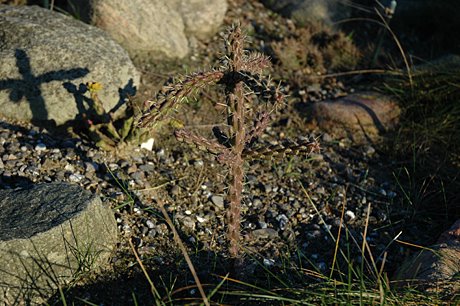
Drooping Cylindropuntia viridiflora

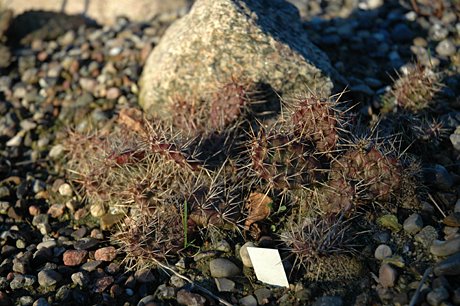
Opuntia humifusa hugging the ground

Opuntia 'Claude Arno'

My cold house grown Lophophora williamsii aren’t doing as well as the Opuntias – some critter ate large bites out of them.